
01
Decoiler Grip & Tension
Mandrel segments, brake condition, hold down function, and coil keeper alignment.

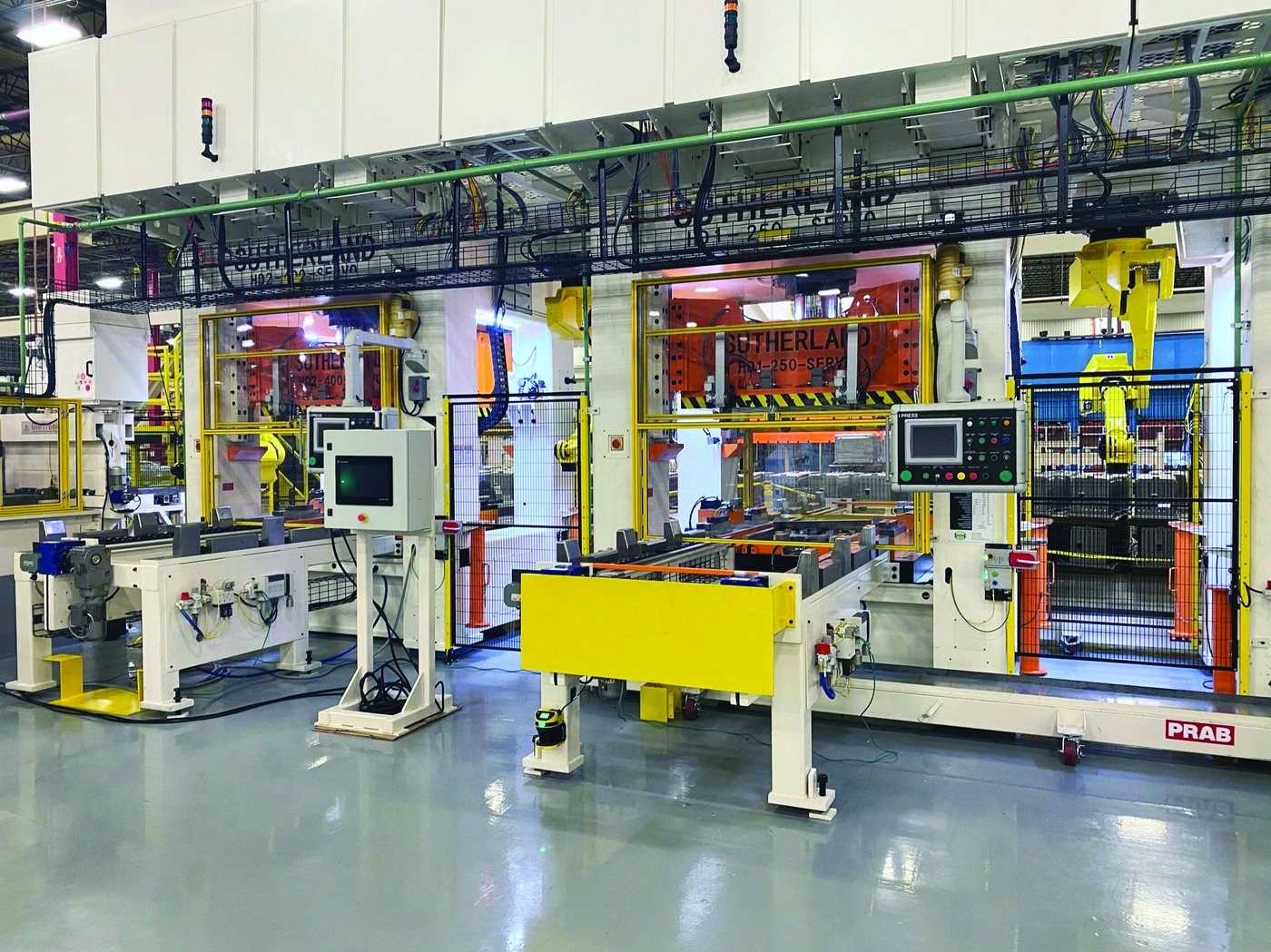
Our three part maintenance series walked through the 11 systems inside every mechanical press. But the first chance to make a bad part happens before the material ever reaches the die. This companion guide moves upstream to the coil feed line: the decoiler, straightener, and servo feeder checks that protect die life, part quality, and uptime, and how I-PRESS® ties the complete line together.
A press in perfect condition can still make bad parts all day long. If the coil is telescoping on the decoiler, if the straightener rolls have taken a set, or if the servo feeder is losing pitch under speed, the die sees material it was never designed for. The press takes the blame. The feed line is the cause.
That is why we treat the feed line as part of the press system, not an accessory in front of it. Here is where to look, in the order the material flows.
The decoiler has one job: pay off material at line speed without letting the coil manage itself. Check mandrel expansion segments for wear and even grip, confirm the brake or drive holds consistent back tension, and verify hold down arms and keepers are doing their work. A coil that shifts or telescopes feeds camber and edge damage into everything downstream.
Straightener rolls wear in the center first, right where most coils run. Inspect rolls for wear bands, plating damage, and debris buildup, and verify the work rolls actually reach their set positions. Material that looks flat on the table can still carry internal stress that releases in the die as twist or springback. If your parts changed when you changed coil suppliers, the straightener settings deserve the first look.
The servo feeder is the metronome of the line. Check feed roll condition and pressure, confirm pilot release timing against the die, and watch for pitch drift at production speed rather than at setup speed. Feed length that wanders a few thousandths shows up as mislocated holes, stressed pilots, and die wear that nobody can explain from inside the press.
Mandrel segments, brake condition, hold down function, and coil keeper alignment.
Wear bands, roll parallelism, entry and exit guide condition, and verified roll positions.
Feed length checked at production speed, pilot release timing, and feed roll pressure.
Feed height and centerline alignment from decoiler to die. Misalignment wears everything faster.
On a Sutherland line, the feed line is not a separate island. I-PRESS® controls integrate servo feeders, transfer systems, and robots over Ethernet I/P, so feed faults, pilot release timing, and die protection all live in one place, with step by step diagnostics on the same screen your operators already use. One line, one control philosophy, one place to look when something drifts.
"The 11 systems keep the press healthy. The feed line keeps the material honest. Uptime needs both."
Already running our PMP inspections? Ask us to include a feed line walkdown on the next visit. Not yet? Let's start with the complete line, end to end.


Our three part maintenance series walked through the 11 systems inside every mechanical press. But the first chance to make a bad part happens before the material ever reaches the die. This companion guide moves upstream to the coil feed line: the decoiler, straightener, and servo feeder checks that protect die life, part quality, and uptime, and how I-PRESS® ties the complete line together.
A press in perfect condition can still make bad parts all day long. If the coil is telescoping on the decoiler, if the straightener rolls have taken a set, or if the servo feeder is losing pitch under speed, the die sees material it was never designed for. The press takes the blame. The feed line is the cause.
That is why we treat the feed line as part of the press system, not an accessory in front of it. Here is where to look, in the order the material flows.
The decoiler has one job: pay off material at line speed without letting the coil manage itself. Check mandrel expansion segments for wear and even grip, confirm the brake or drive holds consistent back tension, and verify hold down arms and keepers are doing their work. A coil that shifts or telescopes feeds camber and edge damage into everything downstream.
Straightener rolls wear in the center first, right where most coils run. Inspect rolls for wear bands, plating damage, and debris buildup, and verify the work rolls actually reach their set positions. Material that looks flat on the table can still carry internal stress that releases in the die as twist or springback. If your parts changed when you changed coil suppliers, the straightener settings deserve the first look.
The servo feeder is the metronome of the line. Check feed roll condition and pressure, confirm pilot release timing against the die, and watch for pitch drift at production speed rather than at setup speed. Feed length that wanders a few thousandths shows up as mislocated holes, stressed pilots, and die wear that nobody can explain from inside the press.
Mandrel segments, brake condition, hold down function, and coil keeper alignment.
Wear bands, roll parallelism, entry and exit guide condition, and verified roll positions.
Feed length checked at production speed, pilot release timing, and feed roll pressure.
Feed height and centerline alignment from decoiler to die. Misalignment wears everything faster.
On a Sutherland line, the feed line is not a separate island. I-PRESS® controls integrate servo feeders, transfer systems, and robots over Ethernet I/P, so feed faults, pilot release timing, and die protection all live in one place, with step by step diagnostics on the same screen your operators already use. One line, one control philosophy, one place to look when something drifts.
"The 11 systems keep the press healthy. The feed line keeps the material honest. Uptime needs both."
Already running our PMP inspections? Ask us to include a feed line walkdown on the next visit. Not yet? Let's start with the complete line, end to end.


